|
|
|
|
|
|
|
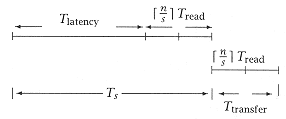
buffer to the processor uses a high-speed bus and begins after the entire file is available. For a file of n blocks, the time to read the file and the buffer-to-processor transfer rate are s times faster than simpler configurations such as (1,1): |
|
|
|
|
|
|
|
|
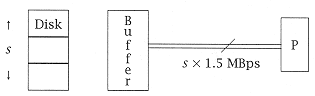
Synchronized disk (ds) files are byte-interleaved across s disks. Each block appears to be shortened by a factor of s. Since each block is distributed over all s drives, n block files are read in: |
|
|
|
|
|
|
|
|
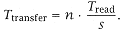
This assumes that the block size is at least s times the sector size (the unit of disk access). It is assumed that the buffer is fully occupied during the disk read time, so now the high-speed transfer is performed after the disk read is complete. Then |
|
|
|
|
|
|
|
|
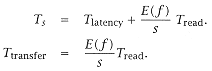
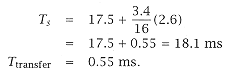
For (1, s) configurations, n = E(f) and |
|
|
|
|
|
|
|
|
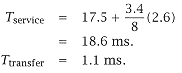
For (1,8), we would have: |
|
|
|
|
|