|
|
|
|
|
|
|
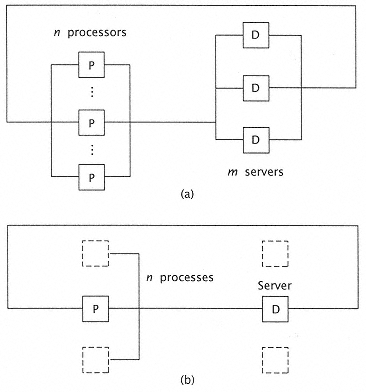
Figure 9.15
Two processor models. (a) Multiple independent
processors (each server may be a cluster of disks). (b)
Multiprogramming processor (usually modeled on a
single server). |
|
|
|
|
|
|
|
|
9.4.4 Multiprogramming Models and Inverted Servers |
|
|
|
|
|
|
|
|
Our model is of multiple processors sharing a common disk server. (See Figure 9.15.) This model is also (approximately) applicable to the case of a multiprogrammed single processor (again assuming independent identically distributed tasks). |
|
|
|
|
|
|
|
|
The processor makes n independent requests to a single server per Tc. No delay is encountered unless the response time is delayed (by waiting) so that the original request process is unable to proceed (because of delayed I/O data). We can model this (approximately) by simply assuming that each of the n processes (requestors) represents an independent processor. This is a rough approximation at best, and should be used with caution. When the multiprogrammed processor is fast and makes more requests to the server than the server can handle, the system saturates and the approximation is a reasonable estimate of overall performance. |
|
|
|
|
|
|
|
|
Our original model has a request rate (m = 1) of: |
|
|
|
|
|