|
|
|
|
|
|
|
(table continued from previous page) |
|
|
|
|
| | |
|
|
|
|
Time processor is stalled due to a read miss |
|
|
|
| | | |
|
|
|
|
Time memory is busy due to a write miss |
|
|
|
| | | |
|
|
|
|
Time processor is stalled due to a write miss |
|
|
|
| | | |
|
|
|
|
|
|
This is the time period where CPU is free to make further requests while the memory is still busy. |
|
|
|
|
|
|
|
|
For write buffer number 1: |
|
|
|
|
|
|
|
|
Since Tbusy(Read) = 0, no memory contention can occur due to a read blocking another read. However, a write that is being serviced can block a read request, and is accounted for in Tw.interference. |
|
|
|
|
|
|
|
|
The first term, 1 - (1 - Reads/cycle)Twrite.mem/cycletime, is the probability of a read request during the number of cycles it takes to process the write request. The second term, Writes/cycle, is the probability of a write request during any cycle. The third term, Twrite.mem/2, is the average waiting time of a read request. |
|
|
|
|
|
|
|
|
After including the write interference time, the time to process a read is: |
|
|
|
 |
|
|
|
|
Tc.miss = Tline + Tw.interference. |
|
|
|
|
|
|
|
|
For write-through cache with buffer 2, we have the following: |
|
|
|
|
|
|
|
|
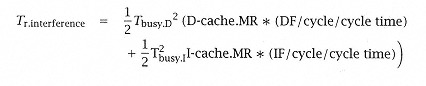
For this case, a read in progress can block an upcoming read, since Tbusy = Tline - Taccess. As a result, we must also include Tr.interference in the final read processing time of memory. |
|
|
|
|
|
|
|
|
For CBWA, there are three combinations shown in Table 10.16. |
|
|
|
|
|