|
|
|
|
|
|
|
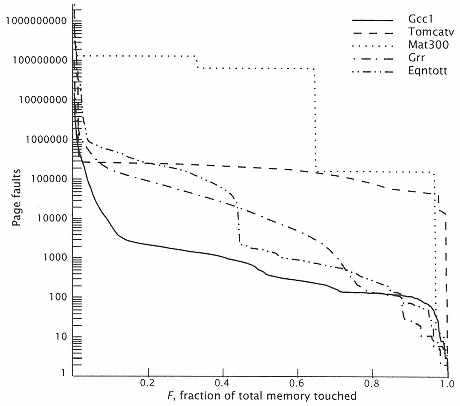
Figure 9.24
Page faults (data pages only) for normalized memory sizes, F (from
Richardson [245]). |
|
|
|
|
|
|
|
|
9.5.2 Virtual Memory I/O Traffic |
|
|
|
|
|
|
|
|
Frequently the above assumption of sufficient memory to contain the entire program is not valid. The virtual memory system is used to page in active portions of the application to more efficiently use a limited memory size. This produces the other major source of I/O traffic. The smaller the memory available to an application, the more I/O traffic due to page faults. Figure 9.23 plots the number of page faults as a function of memory size for five programs. The faults included are only those due to paging. After the program and data set have been initially loaded into the processor memory, the total traffic to the I/O device is the sum of this page fault traffic plus basic I/O traffic. |
|
|
|
|
|
|
|
|
Figure 9.24 shows the same information as Figure 9.23, but now the memory size is normalized to the fraction of memory required by the particular application. When the entire application fits into memory there is no paging traffic required to support program execution. Figure 9.23 has three separate regions of paging behavior: |
|
|
|
|
|
|
|
|
1. The initial region from 0 to 0.1 of the required memory being available to the virtual memory system. In this region, there is severe paging activity because of a completely inadequate amount of available mem- |
|
|
|
|
|