|
|
|
|
|
|
|
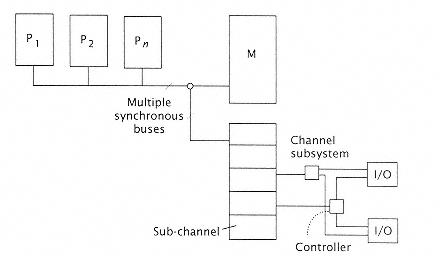
Figure 9.5
I/O channel subsystem to support multiprocessor I/O access. |
|
|
|
|
|
|
|
|
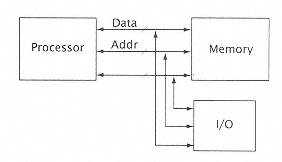
Figure 9.6
I/O subsystem. |
|
|
|
|
|
|
|
|
9.3 Design of Storage Systems |
|
|
|
|
|
|
|
|
In the remainder of this chapter, we concentrate on the analysis and design of storage subsystems, as it is the storage subsystemthe ensemble of disks and the I/O processors that support themthat largely determines system performance. We exclude from discussion the modern media-oriented systems, which require special-purpose processing to sustain data presentation. |
|
|
|
|
|
|
|
|
To a first approximation, the I/O/O's subsystem is one or more control/storage devices that interface between the processor memory bus and the I/O peripheral units. (See Figure 9.6.) |
|
|
|
|
|
|
|
|
The disk drive is a modern success story. By almost any measuredata transfer, cost, and access timesignificant improvements have occurred over the past several decades. Figures 9.7 and 9.8 illustrate various improvements in recording technology. |
|
|
|
|
|