|
|
|
|
|
|
|
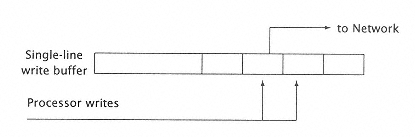
Figure 8.39
Local combining at node. Writes are not forwarded to the
network until either a certain number of cycles elapse after
last write to buffer, or a write occurs to a new line. |
|
|
|
|
|
|
|
|
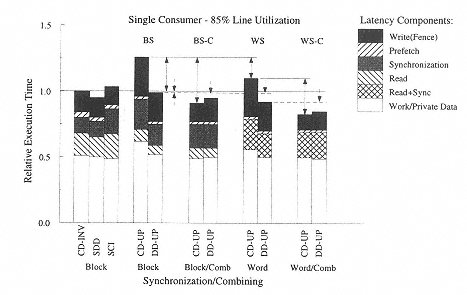
Figure 8.40
Relative execution time for MF application. |
|
|
|
|
|
|
|
|
line buffer is waiting its five cycles, the original value is immediately forwarded to consumers. This simple local combining proves quite effective since writes tend to clusterthe producer produces a number of values for use by the consumers. |
|
|
|
|
|
|
|
|
Local combining is especially useful under heavy traffic conditions. Under such conditions, when the network is busy, a properly buffered system with adequate write buffer size can combine write requests and then, when the network becomes available, make better use of the network bandwidth. |
|
|
|
|
|
|
|
|
The second technique useful in update protocols is word synchronization. Rather than synchronize a block level, each update word carries its own synchronization or validity primitive with it. Thus, instead of waiting for all of the values to be delivered to the consumer by the producer, and then having a synchronization primitive forwarded so that the consumer can begin operation, the consumer can begin operation on a word-by-word basis as they are received. |
|
|
|
|
|