|
|
|
|
|
|
|
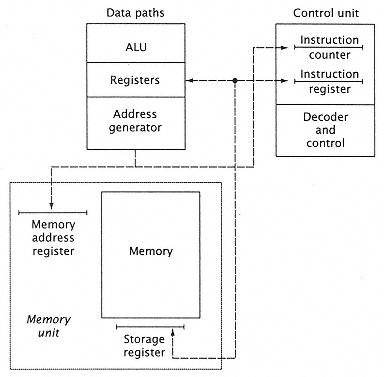
Figure 1.2
Basic units of a processor and (some) paths. |
|
|
|
|
|
|
|
|
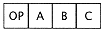
Figure 1.3
The instruction. |
|
|
|
|
|
|
|
|
the implementation that interprets the commands is called the host machinehost (or the macro-) machine. |
|
|
|
|
|
|
|
|
The set of all image commands and storage is defined as the architecture of the machine. By convention, image commands are called instructions or, if the distinction is important, image instructions, and the commands comprising the host are called microinstructions or host instructions. |
|
|
|
|
|
|
|
|
The basic functional units of a processor are shown in Figure 1.2. The control unit contains all the registers and decoding hardware required to interpret the current instructions (in the instruction register). This hardware controls the sequence of actions in the data paths to provide correct instruction execution. The data paths consist of the ALU (arithmetic logical unit), any other specialized execution units (floating-point, etc.), address generation hardware, data and address registers, and the interconnections between these subunits. The memory unit is the last major processor unit. It includes an input address register, an output storage register, and the memory itself. |
|
|
|
|
|